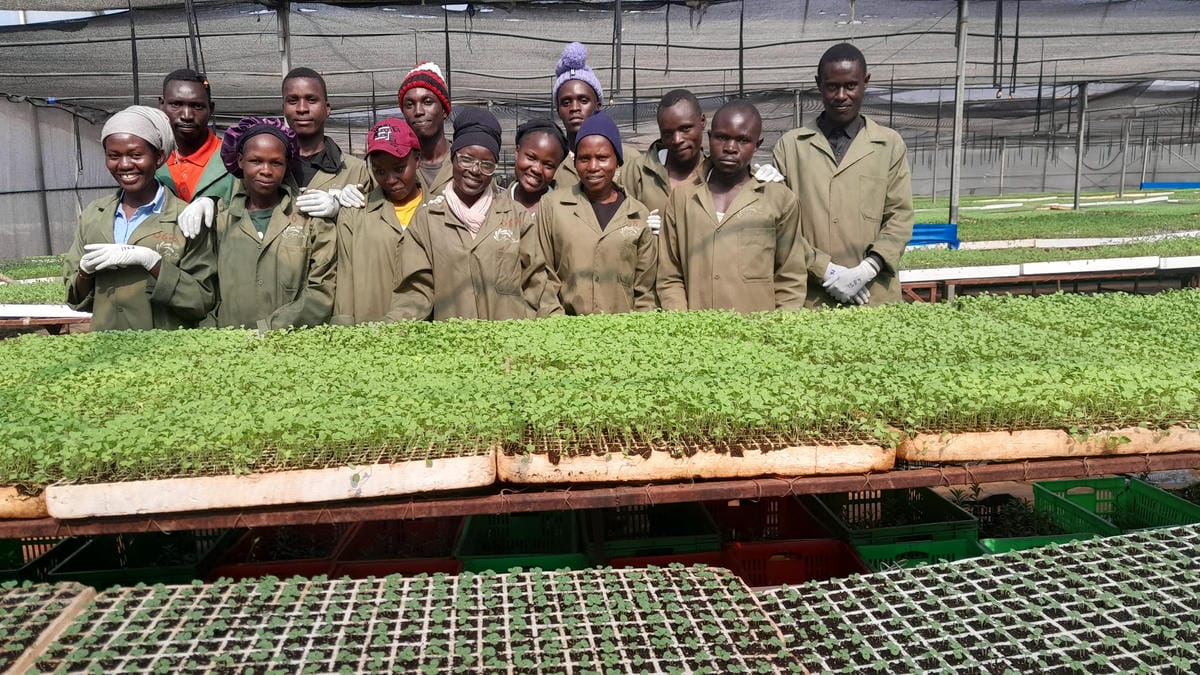
New Agrodeal Kenya Limited Nursery

We propagate seedlings for every crop with discipline, uniformity, and transplant confidence

Propagation is where crop performance begins. At New Agrodeal Kenya Limited, every herb, flower, and vegetable program starts in the nursery with crop-specific planning, careful seed handling, and disciplined growing conditions designed to produce healthy, uniform seedlings.

Our nursery approach reflects the same operational mindset used across the farm: clear schedules, clean processes, accurate tray preparation, and close monitoring from sowing to hardening. This allows field teams to transplant material that is vigorous, even, and ready to establish quickly.

By treating propagation as a precision stage rather than a routine task, we protect crop quality early, reduce variability later, and create a stronger foundation for yield, appearance, and harvest consistency.

Propagation area

Our Propagation Standard

Professional seedling production built around crop requirements

The nursery program is structured to support each crop category with the right sowing method, nursery duration, seedling density, and transplant timing.

Crop-Specific Nursery Planning

Every variety is propagated under its own nursery schedule, tray logic, plug density, and sowing rhythm so transplanting starts from a controlled biological baseline.

Clean Inputs and Uniform Germination

We focus on substrate consistency, seed handling discipline, and irrigation accuracy to achieve even emergence, strong rooting, and reliable early vigor.

Hardening for Field Success

Seedlings are hardened progressively before transplanting so they move from nursery comfort to field performance with stronger resilience and lower establishment stress.

Transplant Readiness Control

Before seedlings leave the nursery, teams review age, root fill, leaf balance, moisture condition, and general uniformity to protect downstream yield potential.

From Seed to Field

A propagation workflow designed for reliability

Our crop management references emphasize nursery duration, seeds per plug, tray capacity, and category-based planning. That same logic is reflected in how we talk about propagation on the website: seedlings are not treated as generic starts, but as crop-specific production units that require precision from day one.

  • Seed selection is matched to crop type, market program, and target planting window.
  • Trays are prepared according to crop-specific plug counts, sowing density, and rooting needs.
  • Germination is monitored closely so moisture, light, and temperature remain stable across batches.
  • Nursery teams grade seedlings continuously and remove weak or uneven trays before transplant planning.
  • Hardening is managed carefully so each batch moves to the field with stronger stems, roots, and establishment confidence.
1

Herb Seedlings

Basil, coriander, chives, dill, parsley, thyme, tarragon, oregano, rosemary, sage, marjoram, lovage, sorrel, and other specialty herbs are propagated for aroma retention, clean structure, and uniform field stand.

2

Flower Seedlings

Gypsophila, sunflower, and Carthamus programs begin with disciplined nursery work so stem strength, visual quality, and harvest consistency start long before the crop reaches the field.

3

Vegetable Seedlings

Where vegetable programs are required, propagation follows the same operational standard: predictable germination, healthy root development, and transplant-ready uniformity across each sowing batch.